MD-M West Focus: Hongrita as a Leading LSR Mold Manufacturer from China for Multi-Component Molding Design

Sep 24, 2026


Hong Kong, Hong Kong S.A.R. Sep 23, 2026 (Issuewire.com) - MD&M West 2026 placed medical manufacturing priorities such as mold design, high-precision interfaces, and material selection in a practical sourcing context. Within that context, Hongrita supports developers with multi-component capabilities as a Leading LSR Mold Manufacturer from China. Its liquid silicone rubber (LSR) mold engineering includes an in-house-developed valve cold-runner system and indexed multi-material configurations. These capabilities support detailed part formation, material-interface control, and waste reduction when project teams evaluate complex medical components.

MD&M West Connects Medical Manufacturing Dialogue with Mold Design Priorities

The 2026 edition of MD&M West was held from February 3 to 5 at the Anaheim Convention Center, the West Coast's largest event for medical device and manufacturing professionals. At Booth 1793, the exhibition display included high-precision molds, tooling, and custom manufacturing solutions. For engineering teams, the exhibition provided a setting to discuss mold structures, material interfaces, and manufacturability controls rather than relying on broad capacity claims.

Engineering teams can use such exhibition discussions to examine product geometry, material combinations, cavity layouts, and validation conditions. This technical dialogue can help project teams identify mold-interface risks before formal development begins. Exhibition presence does not replace engineering validation. Medical manufacturing teams can use the event as an entry point for assessing the multi-component LSR mold capabilities that Hongrita offers and for grounding sourcing decisions in structural and material requirements.

The practical output of that exchange is a structured engineering brief. Teams can record part geometry, proposed material combinations, cavity demand, indexing sequence, and validation expectations before tooling decisions are made. Hongrita can then match that brief to specific LSR and multi-component mold options rather than treating the discussion as a general sales inquiry.

Valve Cold-Runner Engineering Controls Fine LSR Part Formation

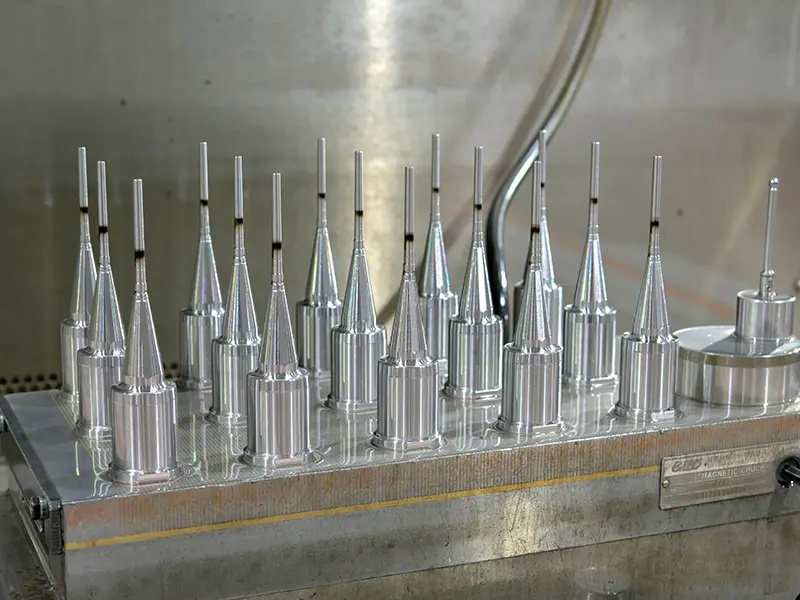
Producing complex LSR parts requires mold logic that coordinates material delivery, curing zones, and demolding conditions. Hongrita's in-house-developed valve cold-runner LSR mold addresses these requirements through fine-detail replication and tighter tolerance control. The runner structure supports controlled material delivery for intricate geometries while reducing gate- and runner-related constraints on finished component areas.

Hongrita positions its LSR/LIM process around four outcomes: high precision, reduced flash and waste, shorter cycle times, and consistent quality. The in-house-developed valve cold-runner system supports these outcomes for very complex LSR parts that need finer details and tighter tolerances, provided it is designed together with the part and process plan. Hongrita can review how the required details, tolerance expectations, material delivery, and demolding conditions fit the proposed tooling concept, which keeps the discussion on manufacturability instead of treating one runner configuration as a universal answer.

Indexed Multi-Material Examples Make Interface Design Inspectable

The value of multi-component molds is easier to assess through documented material combinations, cavity configurations, and indexing mechanisms than through broad capability statements. Hongrita's Mitnehmer example uses 16+16 cavities to combine POM and TPE through 2K injection with an index plate in a 20-second cycle. The configuration illustrates how hard plastics and elastomers can be positioned within the same molding cycle.

Hongrita's Thumbwheel example uses 4+4+4 cavities to combine PC, ABS, and TPE through a 3K index-plate principle in a 22-second cycle. The configuration shows the coordination required for three materials across indexing and interface sequencing. Together with the Mitnehmer, it gives buyers two published reference points for discussing how cavity count, material order, and indexing affect a multi-material mold.

The two examples work best as engineering evidence rather than as specifications to copy. A buyer can compare material combinations, cavity arrangements, indexing principles, and recorded cycles, then ask Hongrita how a different geometry would change those decisions. That comparison keeps the published parameters useful without presenting them as standard quotations or guaranteed project outcomes.

In-Mold Movement Reduces Separate Assembly Handoffs

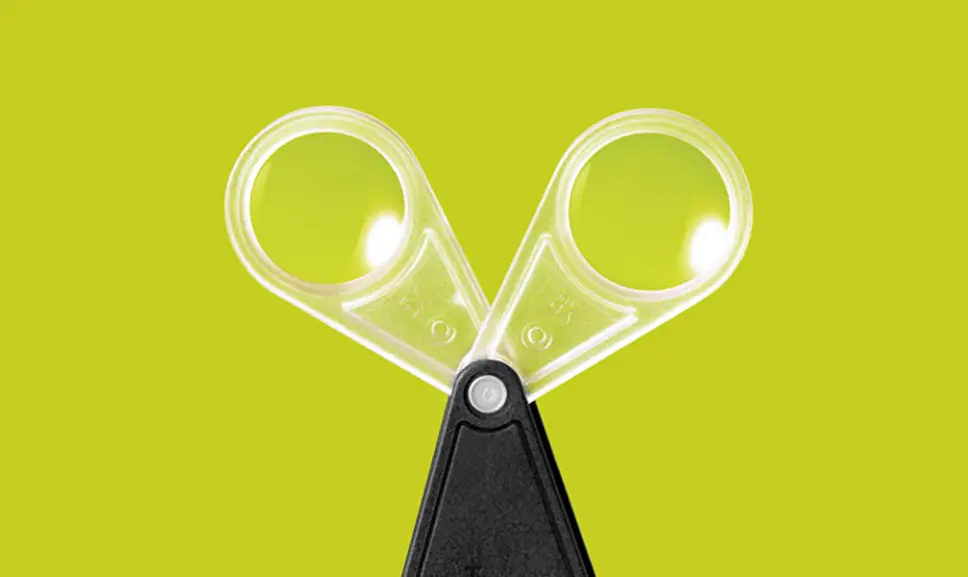
In-mold indexing and in-mold assembly move part-positioning relationships into the mold structure and can reduce separate assembly interfaces after molding. Hongrita's 3-Component Magnifier example uses a 1+1+1 cavitation setup and a 45-second cycle for PMMA, POM, and PA with 30% glass fiber. The example shows how three materials and three movable components are organized and assembled inside one mold, following the in-mold assembly logic that Hongrita documents for complex multi-component parts.

Hongrita's 2K Orange Peeler example uses 4+4 cavitation to process PC and LSR in a 45-second cycle, with a documented mechanism combining index plate ejection, linear gear motion, and index plate rotation. In-mold movement is a design choice that should follow the product architecture. Hongrita can assess whether combining positioning and molding actions meaningfully reduces external handoffs for the proposed part, or whether a separate assembly route remains more practical, based on component motion, material sequence, mold complexity, and the acceptance requirements of the finished product.

Early Engineering Aligns Cavity Strategy with Tool Life

Multi-component LSR projects require cavity modules, interchangeable inserts, cooling methods, and surface treatments to be considered before mold manufacturing begins. Hongrita uses modular multi-cavity structures and interchangeable mold inserts to support flexibility across customized products. Early coordination helps project teams define mold boundaries before mass-production tooling is finalized.

Hongrita also applies cooling technologies and selected coatings to support cycle-time control and mold service life. Bringing these manufacturing conditions into the initial design review helps align cavity strategy, maintainability, and tool-life expectations before the design is frozen. The result is a clearer engineering basis for deciding which mold configuration is appropriate for the project.

Modular inserts, cooling methods, and selected coatings belong in the sourcing conversation as maintainability and production-planning inputs. Buyers can review which inserts are interchangeable, how the cavity concept supports a product family, and which operating conditions affect the selected mold structure. These questions turn general durability language into a project-level maintenance discussion.

A Design-Led LSR Mold Conversation Extends Beyond the Exhibition

Hongrita's design-led approach extends LSR mold discussions beyond a general capability statement. The relevant engineering questions concern manufacturability, material interfaces, cavity strategy, and the production conditions required for a specific part. Framing the discussion around these inputs helps project teams assess whether a proposed multi-component mold can be translated into an executable manufacturing plan.

Project teams can move from exhibition discussions to project-level evaluation by defining part data, material combinations, cavity targets, and validation conditions. Hongrita can then review the mold architecture and production requirements against its documented LSR and multi-component capabilities. This evidence-based handoff keeps the focus on verifiable engineering inputs rather than general promotional claims. For more information on custom mold solutions and manufacturing capabilities, visit https://www.hongrita.com/.
Source :Hongrita

This article was originally published by IssueWire. Read the original article here.

More News
Why Democrats are pivoting to thirst traps
Oct 26, 2026

Why Democrats are pivoting to thirst traps

“It is a very real dynamic that you could have all these videos about Jon Ossoff, and it's not seen as detracting away from his overall message or his seriousness as a politician,” The 19th’s Grace Panetta said on Vox’s Today, Explained podcast. | Elijah Nouvelage/Getty Images Democrats have been emphasizing lots of issues in the runup to the 2026 midterms: The Iran war. The state of the economy and healthcare. Corruption. And…hotness. Specifically, their candidates: The internet is awash in clips of Michigan candidate Abdul El-Sayed pumping iron and podcasters proclaiming that “America deserves a hot president” in a video interspersed with photos of Georgia Sen. Jon Ossoff. Having a good-looking candidate is by no means a new tactic — famously, it may have helped John F. Kennedy win election over Richard Nixon — but the online left is adapting that strategy for the internet and fandom age.  Grace Panetta, a politics reporter for The 19th, wrote about how “thirst edits” of Ossoff in particular are proliferating online. Panetta says the organic origins of a lot of these videos are of particular interest to Democratic operatives, who see it as a way to gain back ground they lost on the internet after the 2024 election.  Panetta spoke with Today, Explained co-host Sean Rameswaram about who’s thirsting over Democratic politicians in the first place, how 2026’s hot candidates are different from those of yore, and whether it’s actually giving them a boost.  Below is an excerpt of their conversation, edited for length and clarity. There’s much more in the full podcast, so listen to Today, Explained wherever you get your podcasts, including Apple Podcasts, Pandora, and Spotify. Where are these edits coming from? Regular online creators. And it’s important to note at the outset that these are not paid partnerships. The campaign is not paying these influencers to make edits about how they think their candidate’s really attractive.  That’s partly why I wanted to dig into it, because it’s organic. These are just online creators wanting to draw visibility and attention to a candidate that they really like. Jon Ossoff is currently running for reelection in these midterms. How do we know for sure that he isn’t somehow behind the campaign? I spoke to several creators who make these videos and they said that they’re doing it for the love of the game and they’re just supporters. His campaign did not give me a quote or a statement for this story. So it’s fair to assume that he’s not directly involved and he doesn’t repost these videos.  But as people pointed out to me, his campaign knows that they have an attractive, compelling candidate. And they’ve previously been vaunted for their digital strategy this cycle of putting out very high-quality livestreams of his rallies. There’s a lot of material for an enterprising TikToker who wants to make these edits or clips. They have a lot to work with.  His campaign, as one person put it, is definitely playing into that, but not directly engaging. It’s a fine line to walk. Is it just an Ossoff thing or is this going on with other candidates? I do recall that Abdul El-Sayed hits the gym. Famously so. Yes, he hits the gym. I just watched so many videos for this story. I also came across a fair number of Gavin Newsom edits. There are people who think he gives sort of a Patrick Bateman, American Psycho vibe. There are also official Democratic accounts, including the TikTok account for the DNC, the headquarters account, which was formerly Kamala HQ, who have been posting edits of Ossoff and also Abdul El-Sayed, who kind of leans into this gym-bro persona.  The headquarters account posted a side-by-side of Ossoff and Abdul El-Sayed with the caption, “There are 69 days until election day.” Nice. Yes. There are also lots of edits of Mamdani, and former President Barack Obama. Obama nostalgia content goes hard on the internet. So you’re seeing these more official side Democratic campaign accounts leaning into it and playing up their candidates. Having an attractive candidate is nothing new. You mentioned Obama. JFK was famously dashing. What feels different about what you’re seeing now on social media? I think this is really a culmination of a lot of different things happening right now in politics and specifically within the Democratic Party.  After their loss in 2024, there was a lot of conversation about the gerontocracy, how we’re governed by a lot of really old people, for the most part, in this century. And also about Democrats’ digital strategy and the aftermath of 2024.  One thing that a lot of people in that digital space have been talking about is how Republicans and the Trump campaign really capitalized on getting that organic engagement on platforms like TikTok and Instagram, where a lot of Americans are now going to get at least some of their news, and also engaging with and encouraging the creation of this kind of organic content on platforms and from creators that are not always expressly political or official-side.  “A candidate’s messaging strategy is only as good as the content and only if it meets people where they are and actually speaks to a real need people have.” As one Democrat I talked to put it, she thinks it’s a way for Democrats to win back the internet and to really create a contrast with the Republicans. And she said to have fun on the internet because Republicans are having fun on the internet and it appears to be working for them, or at least it was in 2024. Is there something about this being something on the left that makes it sort of tricky? This is, broadly speaking, objectification, right? It is a fine line between thirst and objectification. And there is also a gendered element to it that it is mostly men that these types of videos are being made about.  Now, granted, a lot of people make sort of hype edits or positive content about AOC because she’s a very popular female politician on the left, but it’s true that women candidates are held to higher standards in terms of how they present themselves and how their supporters portray them.  It is a very real dynamic that you could have all these videos about Jon Ossoff, and it’s not seen as detracting away from his overall message or his seriousness as a politician. Is there a drawback of focusing on looks? Does it make the Democratic Party or these candidates seem superficial or not that serious? President Trump has been the defining figure in our politics for 10 years now. And he is famously very, very image focused and image obsessed. We live in a very image-obsessed society, and I think there’s kind of a bipartisan acknowledgement of that.  And looks matter to people in all kinds of ways. They do matter in politics, they do matter to voters. Whether you like that that’s the case or not, it is the reality. And I think the way that a lot of people on the left see this is, people want to look at attractive people. People take attractive people more seriously and are more willing to listen to them. So we should play into that and play that up.  That’s also been the case on the right. President Trump famously loves people out of “central casting.” There’s been this whole movement on the right about making conservatism sexy again. And especially at the beginning of the second Trump term, you had all these influencers talking about how the second Trump term was going to usher in this great age of hotness, which is of course very based on sort of stereotypical male-centered Eurocentric beauty standards.  I think the genie’s out of the bottle on this one in terms of the fact that our politics and society is very image-obsessed. And I think the left, being locked out of power, realizes they have to play on those terms and they have fun doing it. You could look at it as giving “Kamala is brat,” which famously did not work. Is it working in any tangible way for Ossoff, for Abdul El-Sayed, or anyone else? I think a lot of the time in politics, the success of a message is really dependent on the broader political situation. I think a part of the reason that the Kamala’s brat thing didn’t work is people were like, “Okay, that’s great, but my gas is too expensive and prices are too high and I’m not happy with how things have gone under the Biden administration, so I don’t really care.” I don’t know that specific digital strategy makes or breaks a campaign or candidate, but it feeds into a bunch of larger factors.  Something that a lot of people I spoke to said they liked about Jon Ossoff is how he is incredibly serious in Senate hearings. He doesn’t grandstand. He really holds Trump administration officials’ feet to the fire. He’s been very focused in his role in the Senate and on the campaign trail about calling out corruption. He’s a very, very gifted speaker and orator. So I think a candidate’s messaging strategy is only as good as the content and only if it meets people where they are and actually speaks to a real need people have. And I think people are really unhappy with the second Trump term and politicians being super old and out of touch, and it’s a perfect storm of factors that makes it work for him.

YOUR NEWS, OUR NETWORK.

Do you have Great News you want to tell the world?

Be it updates about your business or your community, you can make sure that it’s heard by submitting your story to our network reaching hundreds of news sites across 6 verticals.

Copyright © 2015 - 2026 Daily Transport. All Rights Reserved.

About Us

Thailand Tribunal is the country’s next generation of digital news portal, bringing you non-stop news on the happenings in the country and all over the world.

Subscribe Now!