Market Driven Innovation Analysis: Qualtech As a Top 10 Commercial Energy Storage System Supplier in China
Sep 23, 2026
Hangzhou, Zhejiang Sep 23, 2026 (Issuewire.com) - The operation of modern commercial complexes and manufacturing plants involves complex energy balances, where a brief surge in machinery operations or a spike in afternoon cooling demand can disproportionately escalate a facility's monthly utility expenses. To mitigate these challenges, many industrial facility managers turn to a battery energy storage system as a tool for managing demand peaks and stabilizing operational expenditures. However, a common challenge in the industrial market is the prevalence of standardized, off-the-shelf storage enclosures that overlook the specific constraints faced by end-users, such as localized electricity tariff fluctuations, limited spatial footprints, and long-term service accessibility. To resolve these operational challenges, a modern commercial energy storage system supplier must align its core engineering directly with real-world feedback.
By analyzing the underlying market dynamics, Zhejiang Qualtech Co., Ltd. has structured its development process to address these precise operational variables, establishing itself as a prominent Top 10 Commercial Energy Storage System Supplier in China.
Founded in 2011 and headquartered in Hangzhou, Zhejiang, the company is a national high-tech enterprise and recognized as a specialized, refined, and new "little giant" enterprise by the Ministry of Industry and Information Technology. Rather than designing isolated battery hardware, Qualtech utilizes a design methodology that translates field operational data from end-users directly back into the foundational architecture of its comprehensive battery energy storage system products.
Peak-Valley Arbitrage and Synchronized Management Algorithms
Commercial electricity consumers face evolving utility structures characterized by widening peak-to-valley tariff differentials and more stringent peak demand penalties. For an industrial facility, an effective commercial energy storage system supplier cannot rely solely on basic, pre-scheduled charging cycles. Financial returns depend heavily on the system's capacity to execute precise demand-charge management and real-time peak shaving, ensuring that the facility never crosses its designated maximum demand threshold.
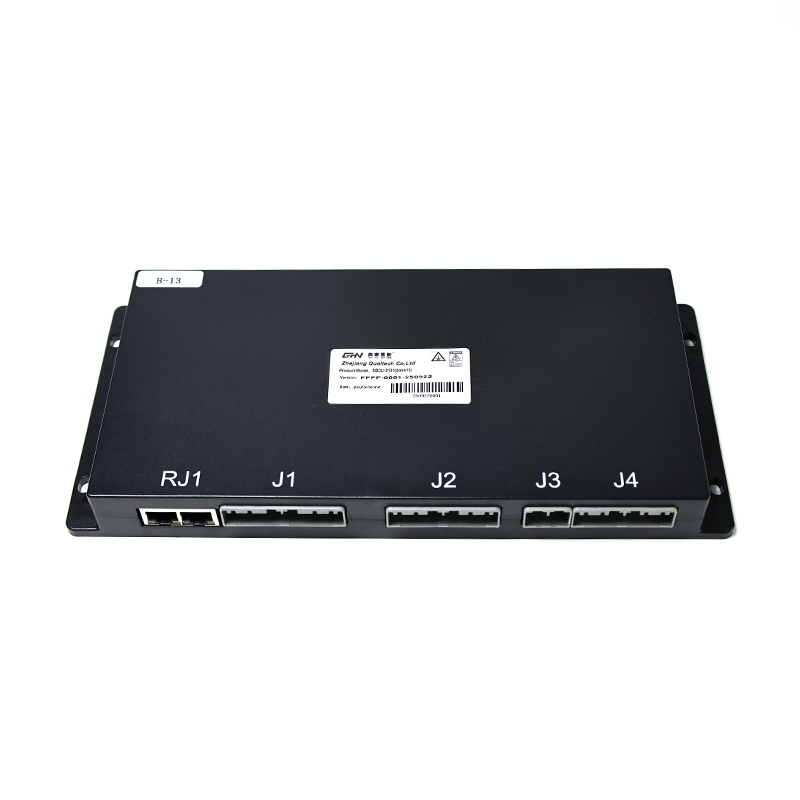
To address this demand, Qualtech leverages its position as a leading entity in both the new energy vehicle BMS and energy storage BMS sub-markets. Within its proprietary "4S+C" core control platform, the energy management system (EMS) and the battery management system (BMS) are co-developed on a single unified code and communication framework. This structural synergy allows the EMS to directly interface with and regulate the charge and discharge power curves of the BMS based on real-time loads.
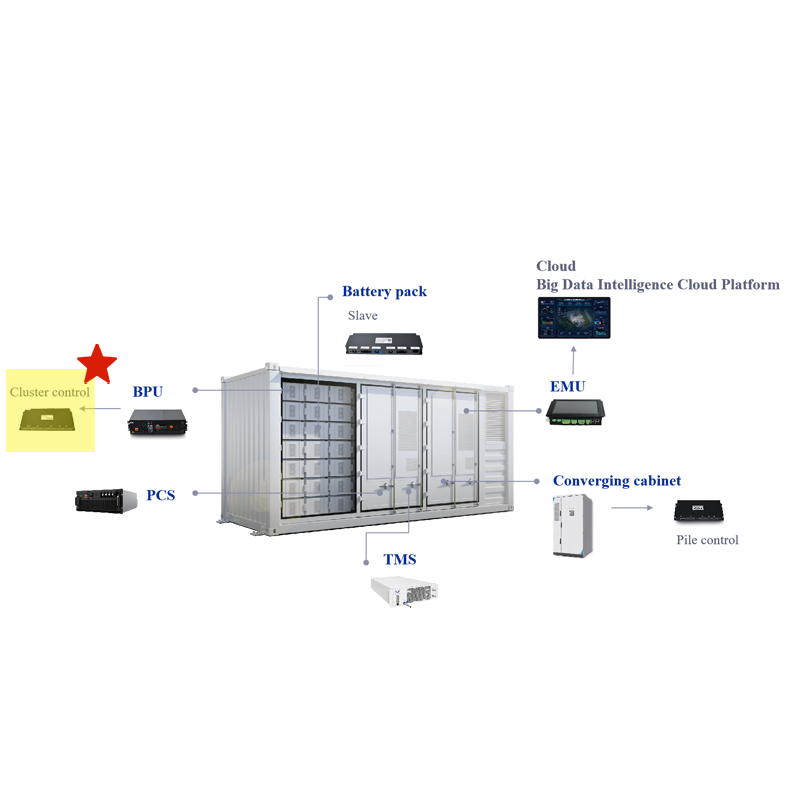
When integrated into a complete commercial energy storage system supplier framework, this level of control ensures that the total battery energy storage system--which comprises the underlying battery architecture, specialized power conversion systems (PCS), and localized EMS--functions as an adaptable asset rather than a rigid stationary battery. Designed for commercial and industrial applications, these outdoor enclosures are engineered to actively calculate and adjust to sudden electrical load shifts, shifting power consumption seamlessly to protect facility managers from expensive peak-tariff penalties.
Spatial Footprints and Thermal Management in Urban Environments
Industrial parks, commercial office towers, and urban production facilities frequently contend with limited spatial availability, meaning there is rarely empty space available for separate, standalone power distribution shelters. Consequently, operators require highly compact, self-contained installations that comply with local fire safety and urban zoning standards without sacrificing total energy capacity.
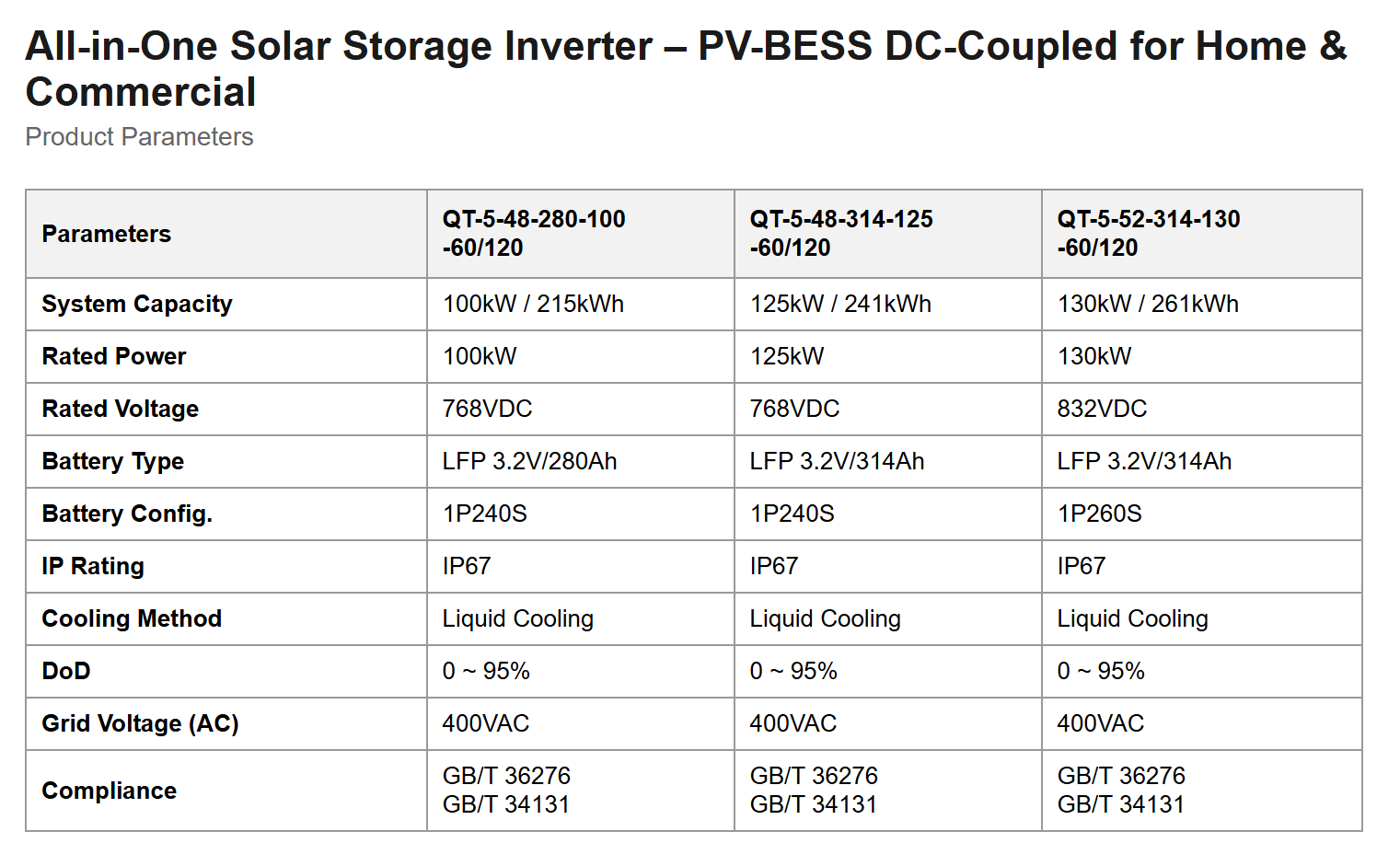
To meet these physical space constraints, Qualtech incorporates modular architecture into its outdoor cabinet-style commercial energy storage system solutions. These modular configurations enable commercial operators to expand system capacity incrementally by placing enclosures side-by-side as their factory or facility electrical demands grow over time. This modular, liquid-cooled architecture was deployed in a 2 MWh commercial and industrial energy storage project in Huzhou, Zhejiang, serving a manufacturing facility where production load variability placed fluctuating demands on the local power supply. The installation validated the system's ability to operate within a compact footprint while maintaining thermal stability under high-rate charge-discharge cycles -- conditions typical of industrial manufacturing environments where energy demand can swing sharply across a single production shift.
To further optimize spatial efficiency, the systems feature liquid-cooled thermal management configurations. By substituting traditional HVAC air cooling with a closed-loop liquid distribution system, the internal battery components maintain a uniform thermal profile even during periods of heavy charging or high ambient temperatures. This thermal control reduces the total footprint of the equipment enclosure, limits internal auxiliary power consumption, and maintains cell temperatures within optimal ranges, helping to mitigate localized hot spots and preserve long-term battery cell integrity.
Lifecycle Management and Remote Diagnostics for Decentralized Sites
As commercial energy storage deployments expand across geographically diverse manufacturing networks, decentralized logistical centers, and distant operational sites, the long-term feasibility of a battery energy storage system is increasingly determined by its continuous operational uptime and minimal maintenance requirements. Dispatching specialized service technicians to distant sites for minor software calibrations or basic system diagnostics can create significant operational bottlenecks for facility managers.
To address these maintenance challenges, the engineering framework at Qualtech extends its market-driven design principles directly into post-installation diagnostics and lifecycle monitoring. The master control units of the company's battery management systems feature localized, non-volatile event logging capabilities that function similarly to an industrial "black box." In the event of an operational anomaly or subtle voltage divergence, the system automatically captures high-resolution status snapshots.
This hardware-level data logging connects with a centralized cloud management platform, enabling engineers and operators to review long-term State of Health (SOH) progressions, cross-reference historical warning logs, and execute targeted parameters remotely. By integrating field diagnostics with cloud accessibility, a commercial energy storage system supplier can significantly lower ongoing operational overhead, identifying potential component issues well before they lead to unexpected system downtime.
Industrial Infrastructure and Compliance Standards
The reliability of a commercial battery energy storage system depends on disciplined manufacturing processes and continuous research and development. From its specialized surface-mount technology (SMT) production lines in Hangzhou to its large-scale system integration facility in Deqing, Zhejiang Qualtech Co., Ltd. maintains strict production controls across all aspects of its proprietary control systems and complete integrated enclosures. The company's manufacturing centers operate under internationally recognized management systems, holding certifications including ISO 9001 and the automotive-grade IATF 16949 standard.
Continuous technical adaptation is maintained through sustained investments in engineering personnel, with research and development professionals comprising more than 50% of the company's total workforce. This engineering focus has resulted in the accumulation of over 130 independent intellectual property rights, alongside joint research initiatives conducted in collaboration with university energy laboratories. This established technical base has allowed Qualtech to secure long-term strategic relationships with prominent state-owned energy enterprises and publicly traded utility corporations, supporting the delivery of reliable energy storage infrastructure across diverse commercial sectors.
By synchronizing control software with localized EMS algorithms, engineering compact and thermally regulated enclosures, and providing cloud-based diagnostics, Qualtech demonstrates how market requirements can shape product design, establishing a dependable operational standard for the modern commercial energy storage system supplier sector.
For further technical specifications, system configurations, or to discuss a commercial BESS deployment, contact Qualtech's engineering team to request a product brochure or schedule a technical consultation. Visit https://www.qualtechenergy.com/ for more information.
Media Contact
ZheJiang Qualtech Co.,Ltd.
15013692485
Building 2, Electromechanical Function Zone, No. 1418-50, Moganshan Road, Yuhang District, Hangzhou
Source :ZheJiang Qualtech Co.,Ltd.
This article was originally published by IssueWire. Read the original article here.










YOUR NEWS, OUR NETWORK.
Do you have Great News you want to tell the world?
Be it updates about your business or your community, you can make sure that it’s heard by submitting your story to our network reaching hundreds of news sites across 6 verticals.