From R-D to Mass Production, Hongrita Connects the Full Cycle as a China Leading Plastic Molding Factory

Sep 24, 2026


Hong Kong, Hong Kong S.A.R. Sep 23, 2026 (Issuewire.com) - Connecting research and development with mass production requires a manufacturing structure that can manage design review, tooling, molding, testing, and equipment integration. As a China Leading Plastic Molding Factory, Hongrita links these stages through early engineering involvement, precision mold making, customized injection molding, laboratory validation, and integrated equipment. Its Zhongshan location serves as a hub for innovation R&D, engineering, major projects, and production. This structure gives project teams a defined route for transferring requirements from development into production.

Zhongshan Coordinates R&D, Engineering and Major Projects

Hongrita's Zhongshan hub coordinates innovation R&D, engineering reviews, major projects, and production preparation within one organizational framework. The location is also identified as a proving ground for change management, new technology applications, and intelligent manufacturing. This provides a clear interface for moving technical decisions toward production planning.

By combining these functions, Hongrita can keep R&D conclusions, engineering reviews, and production preparation within a shared responsibility chain. The framework is most useful when responsibilities are defined at each transition: who reviews the product concept, who converts requirements into tooling inputs, and how production preparation receives approved engineering information. Change management and manufacturing validation then become explicit parts of the full-cycle workflow rather than implicit assumptions.

Mold Manufacturing Converts DFM Inputs into Production Hardware

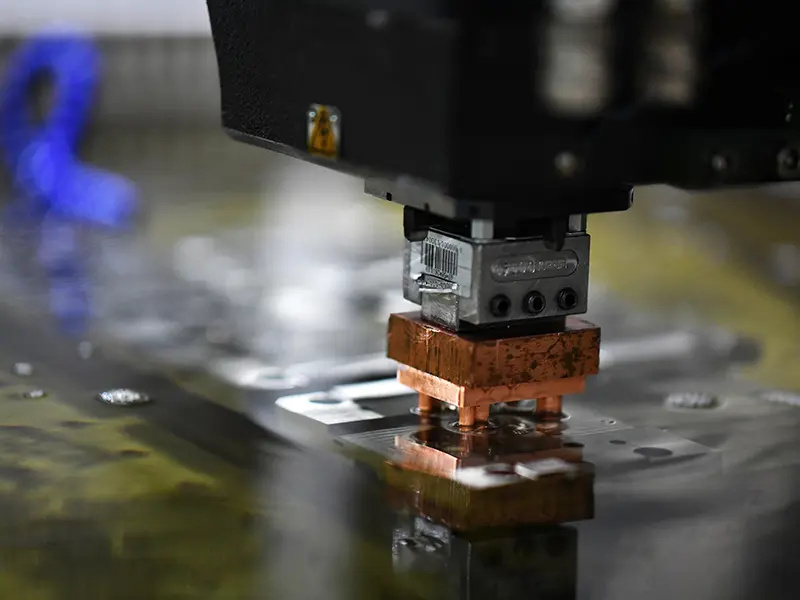
Hongrita translates Design for Manufacturing (DFM) and manufacturability inputs into mold and machining resources. Its precision injection molding and turnkey scope lists high-precision tools, electrical discharge machining (EDM), computer numerical control (CNC), and CNC turning and milling, alongside dedicated injection and medical workshops. These resources support the conversion of geometric and material requirements into tooling components and processing routines.

Hongrita's high-performance mold manufacturing platform emphasizes precision, complexity, and advanced tooling solutions. This gives product-design inputs a direct role in determining mold structure and processing pathways. The tooling phase therefore becomes the point where DFM findings are converted into executable manufacturing decisions.

DFM findings must be expressed in decisions that can be executed on the shop floor. Hongrita's listed machining and tooling resources provide a path from geometry review to component processing, but the route still depends on material, tolerance, surface, and mold-structure requirements. Buyers can therefore use the DFM stage to confirm which risks are resolved by design changes, which must be controlled through tooling and process planning, and which inspection records will document the result.

Customized Injection Production Carries the Design into Volume

Hongrita's precision injection workshop connects validated molds with material and process development, customized production, and production-efficiency management. The Innovative Materials and Processes function supports work on more complex injection requirements and new process combinations, enabling more refined injection manufacturing and continuous innovation in materials and processes. This creates a defined environment for preparing a validated mold for production.

The Customized Production and Production Efficiency Enhancement functions allow Hongrita to align manufacturing methods with project requirements and production planning. Moving a validated mold into production also requires the approved process assumptions to remain visible. Hongrita can connect the selected material and process route with the customized production plan, while production-efficiency work is evaluated against the actual cycle and delivery objectives rather than against a standard result.

Multiple Laboratories Create a Pre-Release Validation Gate

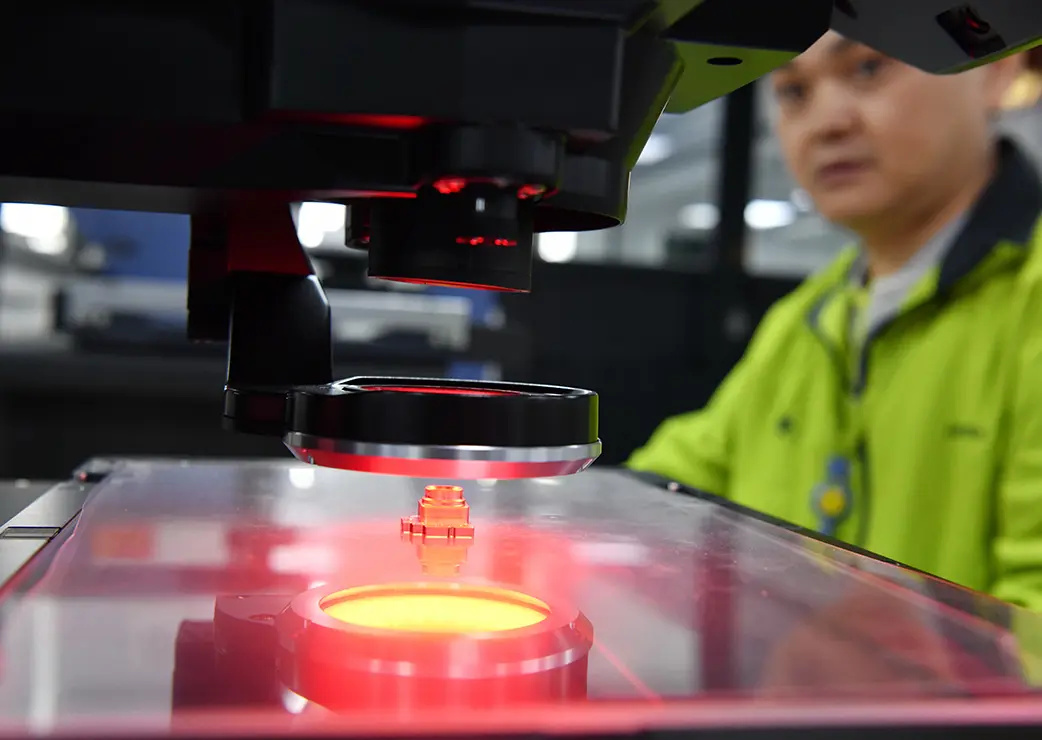
Hongrita separates pre-release validation across optical measurement, physical measurement, environmental testing, and reliability testing. Optical measurement supports high-precision and non-contact inspection, while physical measurement supports quality control, process optimization, and fault diagnosis; environmental testing supports regulatory compliance, innovation opportunities, and sustainability. This division gives project teams multiple verification routes instead of relying on one final inspection point.

Reliability Testing at Hongrita covers product-quality validation, defect prevention, cost savings, and continuous improvement, allowing findings to route back to design or process review before mass-production release. The laboratory structure supports a staged release decision when each test category has a defined purpose: dimensional checks, physical-property review, environmental conditions, and reliability questions are kept separate instead of being combined into one general inspection statement. Project teams still specify samples, methods, conditions, and acceptance limits.

Equipment Integration Unifies Mold, Machine and Process Control

Hongrita's equipment-integration scope combines patented molds, customized molding machines, turntables, self-developed supporting equipment, detection systems, control systems, and management software. The value of this integration is the ability to coordinate mechanical actions, process feedback, and production management within one molding solution, so that molds, machines, and auxiliary devices work as a configured system. Each project still requires a defined equipment and control configuration.

Detection, control, and management systems allow Hongrita to connect molding actions with quality feedback and production oversight within a single molding solution. This creates a managed interface between mold manufacturing, molding execution, and corrective response. The integrated system supports full-cycle delivery without implying that one standard cell fits every product.

Equipment integration should therefore be reviewed as a configured system rather than a list of available components. Hongrita can define which mold, machine, turntable, auxiliary device, detection function, control function, and management interface belong in the proposed cell. Buyers can then review action sequences, data responsibilities, and acceptance points as one production concept. This makes the integration scope understandable without promising a universal turnkey layout.

A Multi-Site Footprint Supports Full-Cycle Project Transfer

Hongrita's Shenzhen, Zhongshan, and Penang locations have distinct roles within the full-cycle workflow. Shenzhen focuses on 3C and intelligent technology components, overseas commercial molds, and in-house use molds. Zhongshan supports innovation R&D, engineering, major projects, and production. Penang develops tooling and molding business in Southeast Asia, supports overseas team training, and serves as the base for the group's global expansion. These roles provide a documented basis for cross-site project planning.

Cross-site planning is effective only when the project handoff is explicit. Hongrita can assign R&D, tooling, molding, validation, production, and regional-support responsibilities according to the documented role of each location, from Shenzhen's 3C and mold focus to Penang's Southeast Asia development. Buyers can then confirm where reviews occur, which site owns each deliverable, and how approved information moves between stages. This converts the multi-site footprint from a scale statement into a practical project-governance question.

Hongrita operates six physical factories and employs approximately 2,500 people. Scale alone does not determine project fit, but the multi-site footprint provides organizational capacity for coordinating development, tooling, production, and regional support. Project teams can use the stated location roles to decide where technical and production responsibilities should sit. To explore the complete range of molding solutions, visit https://www.hongrita.com/.
Source :Hongrita

This article was originally published by IssueWire. Read the original article here.
More News
Why Democrats are pivoting to thirst traps
Oct 26, 2026

Why Democrats are pivoting to thirst traps

“It is a very real dynamic that you could have all these videos about Jon Ossoff, and it's not seen as detracting away from his overall message or his seriousness as a politician,” The 19th’s Grace Panetta said on Vox’s Today, Explained podcast. | Elijah Nouvelage/Getty Images Democrats have been emphasizing lots of issues in the runup to the 2026 midterms: The Iran war. The state of the economy and healthcare. Corruption. And…hotness. Specifically, their candidates: The internet is awash in clips of Michigan candidate Abdul El-Sayed pumping iron and podcasters proclaiming that “America deserves a hot president” in a video interspersed with photos of Georgia Sen. Jon Ossoff. Having a good-looking candidate is by no means a new tactic — famously, it may have helped John F. Kennedy win election over Richard Nixon — but the online left is adapting that strategy for the internet and fandom age.  Grace Panetta, a politics reporter for The 19th, wrote about how “thirst edits” of Ossoff in particular are proliferating online. Panetta says the organic origins of a lot of these videos are of particular interest to Democratic operatives, who see it as a way to gain back ground they lost on the internet after the 2024 election.  Panetta spoke with Today, Explained co-host Sean Rameswaram about who’s thirsting over Democratic politicians in the first place, how 2026’s hot candidates are different from those of yore, and whether it’s actually giving them a boost.  Below is an excerpt of their conversation, edited for length and clarity. There’s much more in the full podcast, so listen to Today, Explained wherever you get your podcasts, including Apple Podcasts, Pandora, and Spotify. Where are these edits coming from? Regular online creators. And it’s important to note at the outset that these are not paid partnerships. The campaign is not paying these influencers to make edits about how they think their candidate’s really attractive.  That’s partly why I wanted to dig into it, because it’s organic. These are just online creators wanting to draw visibility and attention to a candidate that they really like. Jon Ossoff is currently running for reelection in these midterms. How do we know for sure that he isn’t somehow behind the campaign? I spoke to several creators who make these videos and they said that they’re doing it for the love of the game and they’re just supporters. His campaign did not give me a quote or a statement for this story. So it’s fair to assume that he’s not directly involved and he doesn’t repost these videos.  But as people pointed out to me, his campaign knows that they have an attractive, compelling candidate. And they’ve previously been vaunted for their digital strategy this cycle of putting out very high-quality livestreams of his rallies. There’s a lot of material for an enterprising TikToker who wants to make these edits or clips. They have a lot to work with.  His campaign, as one person put it, is definitely playing into that, but not directly engaging. It’s a fine line to walk. Is it just an Ossoff thing or is this going on with other candidates? I do recall that Abdul El-Sayed hits the gym. Famously so. Yes, he hits the gym. I just watched so many videos for this story. I also came across a fair number of Gavin Newsom edits. There are people who think he gives sort of a Patrick Bateman, American Psycho vibe. There are also official Democratic accounts, including the TikTok account for the DNC, the headquarters account, which was formerly Kamala HQ, who have been posting edits of Ossoff and also Abdul El-Sayed, who kind of leans into this gym-bro persona.  The headquarters account posted a side-by-side of Ossoff and Abdul El-Sayed with the caption, “There are 69 days until election day.” Nice. Yes. There are also lots of edits of Mamdani, and former President Barack Obama. Obama nostalgia content goes hard on the internet. So you’re seeing these more official side Democratic campaign accounts leaning into it and playing up their candidates. Having an attractive candidate is nothing new. You mentioned Obama. JFK was famously dashing. What feels different about what you’re seeing now on social media? I think this is really a culmination of a lot of different things happening right now in politics and specifically within the Democratic Party.  After their loss in 2024, there was a lot of conversation about the gerontocracy, how we’re governed by a lot of really old people, for the most part, in this century. And also about Democrats’ digital strategy and the aftermath of 2024.  One thing that a lot of people in that digital space have been talking about is how Republicans and the Trump campaign really capitalized on getting that organic engagement on platforms like TikTok and Instagram, where a lot of Americans are now going to get at least some of their news, and also engaging with and encouraging the creation of this kind of organic content on platforms and from creators that are not always expressly political or official-side.  “A candidate’s messaging strategy is only as good as the content and only if it meets people where they are and actually speaks to a real need people have.” As one Democrat I talked to put it, she thinks it’s a way for Democrats to win back the internet and to really create a contrast with the Republicans. And she said to have fun on the internet because Republicans are having fun on the internet and it appears to be working for them, or at least it was in 2024. Is there something about this being something on the left that makes it sort of tricky? This is, broadly speaking, objectification, right? It is a fine line between thirst and objectification. And there is also a gendered element to it that it is mostly men that these types of videos are being made about.  Now, granted, a lot of people make sort of hype edits or positive content about AOC because she’s a very popular female politician on the left, but it’s true that women candidates are held to higher standards in terms of how they present themselves and how their supporters portray them.  It is a very real dynamic that you could have all these videos about Jon Ossoff, and it’s not seen as detracting away from his overall message or his seriousness as a politician. Is there a drawback of focusing on looks? Does it make the Democratic Party or these candidates seem superficial or not that serious? President Trump has been the defining figure in our politics for 10 years now. And he is famously very, very image focused and image obsessed. We live in a very image-obsessed society, and I think there’s kind of a bipartisan acknowledgement of that.  And looks matter to people in all kinds of ways. They do matter in politics, they do matter to voters. Whether you like that that’s the case or not, it is the reality. And I think the way that a lot of people on the left see this is, people want to look at attractive people. People take attractive people more seriously and are more willing to listen to them. So we should play into that and play that up.  That’s also been the case on the right. President Trump famously loves people out of “central casting.” There’s been this whole movement on the right about making conservatism sexy again. And especially at the beginning of the second Trump term, you had all these influencers talking about how the second Trump term was going to usher in this great age of hotness, which is of course very based on sort of stereotypical male-centered Eurocentric beauty standards.  I think the genie’s out of the bottle on this one in terms of the fact that our politics and society is very image-obsessed. And I think the left, being locked out of power, realizes they have to play on those terms and they have fun doing it. You could look at it as giving “Kamala is brat,” which famously did not work. Is it working in any tangible way for Ossoff, for Abdul El-Sayed, or anyone else? I think a lot of the time in politics, the success of a message is really dependent on the broader political situation. I think a part of the reason that the Kamala’s brat thing didn’t work is people were like, “Okay, that’s great, but my gas is too expensive and prices are too high and I’m not happy with how things have gone under the Biden administration, so I don’t really care.” I don’t know that specific digital strategy makes or breaks a campaign or candidate, but it feeds into a bunch of larger factors.  Something that a lot of people I spoke to said they liked about Jon Ossoff is how he is incredibly serious in Senate hearings. He doesn’t grandstand. He really holds Trump administration officials’ feet to the fire. He’s been very focused in his role in the Senate and on the campaign trail about calling out corruption. He’s a very, very gifted speaker and orator. So I think a candidate’s messaging strategy is only as good as the content and only if it meets people where they are and actually speaks to a real need people have. And I think people are really unhappy with the second Trump term and politicians being super old and out of touch, and it’s a perfect storm of factors that makes it work for him.

YOUR NEWS, OUR NETWORK.

Do you have Great News you want to tell the world?

Be it updates about your business or your community, you can make sure that it’s heard by submitting your story to our network reaching hundreds of news sites across 6 verticals.

Copyright © 2015 - 2026 Daily Transport. All Rights Reserved.

About Us

Thailand Tribunal is the country’s next generation of digital news portal, bringing you non-stop news on the happenings in the country and all over the world.

Subscribe Now!