Dr. Charmen Douglas: Combining Clinical Excellence, Innovation, - Business Strategist in healthcare AI technology

Sep 28, 2026
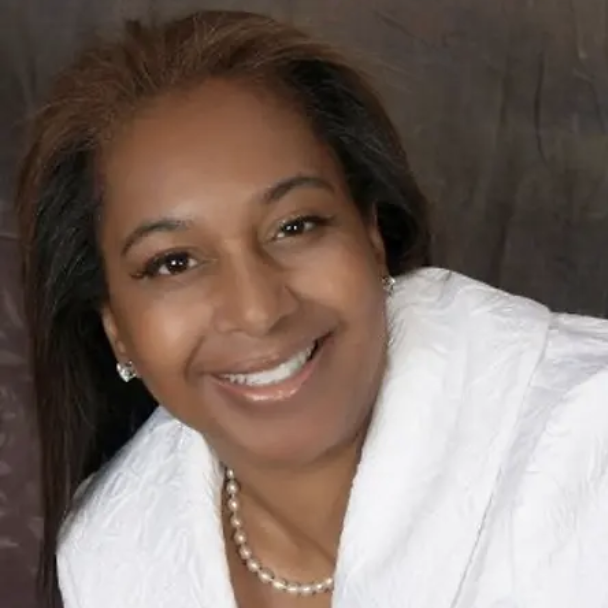

The Smile Designer Advances Patient Care, Healthcare Innovation, and Professional Leadership Through Dentistry and Entrepreneurship 


Jersey City, New Jersey Sep 28, 2026 (Issuewire.com) - With more than 25 years of clinical and business experience, Dr. Charmen Douglas has established a multifaceted career at the intersection of dentistry, healthcare innovation, entrepreneurship, and community service. As CEO and Founder of Beautiful Smile LLC, Genesis Care LLC, and Organic Array, she has developed a professional path defined by innovation, leadership, and a commitment to helping others.

Based in Gibbsboro, New Jersey, Dr. Douglas specializes in neuromuscular dentistry, a highly specialized area of dentistry focused on pain management. Her expertise has distinguished her within the dental profession, while her broader work has earned recognition through honors including New Jersey's Top Dentist designation for five consecutive years, New Jersey's Heroes in Medicine, and the Forbes Enterprise Award, which her dental practice was the first to receive.

Dr. Douglas earned her DMD from Temple University School of Dentistry and has continued to expand her professional expertise across clinical practice, practice management, technology, and healthcare leadership. Her areas of specialization include neuromuscular dentistry, pain management, artificial intelligence in medicine, practice management, and implantology.

Her approach to dentistry extends beyond traditional clinical care. Dr. Douglas is passionate about integrating dental and medical care while exploring innovative approaches that can improve the patient experience and strengthen healthcare practices. She is also a globally recognized speaker on artificial intelligence in medicine, practice innovation, and leadership dynamics. Her expertise has led to invitations to speak at major international conferences, including Health 2.0 in Singapore.

As an entrepreneur and product developer, Dr. Douglas has continued to explore new possibilities within healthcare. She is a patent creator and has developed solutions designed around evolving needs in medicine and dentistry. Her interest in innovation also extends to the future of practice leadership, and she is currently researching and writing white papers focused on management styles and programs in dentistry.

Dr. Douglas has also made significant contributions through writing and publishing. In 2013, she became a best-selling author with More Than a Mouthful. She also co-authored The New Leaders in Marketing in 2012, a book examining the emergence of internet and digital marketing alongside the growing influence of social media.

Her professional leadership has included service with the National Dental Association, including a role in its House of Delegates and past presidency. She is also associated with the American Academy of Cosmetic Dentistry and the American Academy of General Dentistry. Through these leadership experiences, she has remained committed to supporting colleagues and encouraging continued growth throughout the profession.

Outside her clinical and entrepreneurial work, Dr. Douglas has made community service an important part of her career. She founded Give Back A Smile, a nonprofit organization supporting victims of domestic violence. She is also an active member of The Links, Incorporated and Alpha Kappa Alpha Sorority, Inc. As a certified Minority Women Business Enterprise in New Jersey, she advocates for diversity, innovation, and economic empowerment.

For Dr. Douglas, success is ultimately measured by the difference she can make in the lives of others. She remains actively involved in both administrative counseling and clinical work, finding purpose in helping patients, colleagues, and small businesses move forward.

Known as "The Smile Designer," Dr. Douglas sees her role as extending far beyond creating healthier smiles. Her work is centered on changing lives daily, whether through patient care, mentoring, business leadership, healthcare innovation, or community involvement. After more than two decades in dentistry, her passion for the profession remains strong, and she continues to create opportunities for others while pursuing new ways to contribute to the future of healthcare.

Learn more about Charmen Douglas:

Through her America's Best in Medicine profile: https://americasbestinmedicine.com/providers/charmen-douglas or through Beautiful Smile, LLC, https://beautifulmouth.com/about/

America's Best in Medicine

America's Best in Medicine is a specialist online platform dedicated to amplifying the voices of leading healthcare professionals across the United States. They bring together top healthcare providers from all specialties and cities to share expert-driven articles, research, commentary, and clinical insight. Their core purposes are to showcase excellence in healthcare, build trust between providers and the public, and ensure that expert voices are elevated and heard in shaping medicine. Through their platform, users can access a community of leaders, opportunities for providers to share expertise, and trusted guidance for patients and peers alike.

Media Contact

America's Best in Medicine


*****@americasbestinmedicine.com

1-877-346-0175

https://americasbestinmedicine.com

Source :Charmen Douglas

This article was originally published by IssueWire. Read the original article here.

More News
What China wants from AI
Sep 29, 2026

What China wants from AI

Chinese President Xi Jinping and US President Donald Trump in the White House on September 24, 2026. | Kevin Dietsch/Getty Images The national conversation about AI in the US is full of fear: fear about AI’s potential to end humanity, fear of data centers moving in, fear that government officials will do absolutely nothing even as the industry pleads for regulation, you name it. But the AI conversation looks remarkably different across the Pacific. In China, driven by public enthusiasm and a state-backed push for AI dominance, the country is in the midst of a large-scale AI integration into all facets of its society, driven by Chinese leader Xi Jinping’s support for the technology. “He’s super AI-pilled,“ said Kyle Chan, an expert on China’s technology development and industrial policy at the Brookings Institution. “When you look at his speeches, when you look at Chinese policy documents, everything is about rolling AI out to as many domains as possible: manufacturing, services, education, healthcare, pharmaceuticals, and of course the military. Everything is about trying to integrate AI.” Beneath this push for a high-speed AI adoption across Chinese society lies a regulatory framework designed to safeguard political stability and keep boundaries on the kind of information AI models are able to share. Chan joined Vox’s Today, Explained podcast to speak with co-host Sean Rameswaram about the different AI anxieties in the US and China, and whether joint regulations on AI safety are possible while the two countries are engaged in an AI arms race. Below is an excerpt of their conversation, edited for length and clarity. There’s much more in the full podcast, so listen to Today, Explained wherever you get podcasts, including Apple Podcasts, Pandora, and Spotify. One thing that really struck me about the way the Chinese government is approaching AI is that China has this explicit goal, right? China has some concrete plans to boost AI adoption through the country, including its recent AI-plus initiative. And their goal is to try to boost the penetration of AI in so-called terminal devices, everything from computers to smartphones, to 90 percent or more by 2030.  It’s going really fast and it is, in part, a state mobilization effort. There are state-owned companies, there are government agencies that are trying to integrate AI, but also there’s just an enthusiasm from the general population. If you look at surveys like the latest Gallup poll, people in China are much more enthusiastic and positive about how AI might help them and help the country. It’s quite a striking contrast with what you see in the US in terms of attitudes towards AI. Because people here are worried about AI as an existential threat. People here are worried about AI taking their jobs, people here are worried about AI data centers in their backyards. Is that not the vibe in China? Not so much. There is some concern about AI and jobs. But in general, China’s not worried about AI wiping out humanity. You really don’t hear that from the Chinese policymakers. There’s no talk about a P(doom), the probability that AI will wipe out humanity. So this is just a different approach to AI risk in general. And why not the existential risk?  You know, one factor, I think, is sci-fi and the culture.  Huh. We’ve watched too many movies? It seems like every major sci-fi book or film involves machines trying to kill us all, and I think that that idea has become very prevalent.  When you imagine a future with AI, that is one of the primary futures that people imagine, versus in China, I think a lot of the attitude towards technology in general, not just AI, is about using this edge to keep up and to become more competitive.  For a lot of people in China, technology was something that they saw transform their lives in real time. And Chinese leaders think it’s the key to China’s future modernization and transformation to a global superpower. Let’s talk about what concerns there are. One of the biggest concerns that Chinese political leaders have when it comes to AI is political and social instability. They don’t want AI-generated content to act the way that social media or the internet broadly could, which is to disseminate information, maybe deepfakes, maybe viral news that could threaten the [Chinese Communist Party’s] hold on power. For AI-generated content, it was about making sure that the models didn’t say the wrong things about sensitive topics. A lot of this is about social and political risk rather than about existential technological risk per se.  From pretty early on, China has been developing a model registration system where basically AI services have to be vetted in advance and go through a battery of tests where they’re asked sensitive political questions and they’re supposed to either not answer them or say the “right thing” before they are officially registered. And once they’re registered, then they can be released to the public. So it’s a pretty tight regulatory framework for controlling things like political content. We know that there’s a high unemployment rate in China, especially among young people, which is also a great concern of the government. Are people worried that this bullish approach to AI could affect employment numbers? Yes and no. On the one hand, China is actually facing this demographic problem with a shrinking labor force. Fewer people want to go into, say, factory jobs, but China still wants to make everything the world wants to buy.  They see AI as a partial solution to that, a way to automate things like manufacturing. On the other hand, though, there are growing concerns in China about job loss. And you see also some recent court cases in China where they basically are telling employers, you cannot use AI as a reason to fire workers.  But I think overall, what they’re trying to do is they’re trying to find this balance between the diffusion of the technology and trying to prevent any kind of large-scale protest movement that might arise from sudden mass unemployment of, say, factory workers or food delivery drivers. And President Xi was of course here in Washington last week. From the limited photos we have of the state dinner or of President Trump and President Xi on the tarmac, everything looks so chummy, even though we are so clearly in a cold war with China over AI. The president’s always talking about how he wants to win.  Was there tension in his visit to Washington last week? Did you notice any? The weird thing is that just between these two men, there seems to be this kind of romance where Trump really fawns over Xi Jinping.  I think he has tremendous respect, even admiration, for Xi Jinping’s grip on power and control over the government apparatus in general.  What is happening under the surface, though, is continuing tensions and a deep competitive structural relationship. That involves especially competition in AI. AI has emerged as a new fault line of competition between the US and China, one that could come to define the relationship going forward.  I think that on the one hand, they’re talking about cooperation on things like AI safety and AI risk. On the other hand, there’s a whole bunch of issues where the US wants to lead. China wants to also get ahead. And when it comes to things like distillation or cyber capabilities, it’s as zero-sum as it’s ever been. Who’s winning? It depends on what you’re looking at and how you define winning. If you’re talking about the best models, for sure the US. And virtually everyone in China would agree, right? In fact, Anthropic’s Claude is very popular in China, even though technically Anthropic bans its use in China. But aren’t their open-source models kind of popular here? Yes, exactly. Chinese open-source models are getting more popular in the US, especially at a time when some of the capabilities are so incredible that most normal people don’t really need them, and they also don’t want to pay for the most advanced and most expensive models. Ultimately it’s this weird sort of cooperation and competition at the same time. American models are popular in China. Chinese models are popular in America. We’re at each other’s throats, but quietly, politely. Does the cold war make it all but certain that safety isn’t going to really be a chief priority for either country until something terrible happens? The fierce level of competition and the very, very deep distrust between the two countries makes any kind of cooperation on AI safety very, very difficult. Even just talking to each other, having the US and China establish an official AI dialogue, which apparently they’ve agreed to, is seen as a huge first step, even though they’re just talking.  There’s a long, long road to go before we can even think about something like an arms control treaty or a broader international agreement about AI and AI safety. But I think that’s what some people, especially in Silicon Valley, are trying to jump to.

YOUR NEWS, OUR NETWORK.

Do you have Great News you want to tell the world?

Be it updates about your business or your community, you can make sure that it’s heard by submitting your story to our network reaching hundreds of news sites across 6 verticals.

Copyright © 2015 - 2026 Daily Transport. All Rights Reserved.

About Us

Thailand Tribunal is the country’s next generation of digital news portal, bringing you non-stop news on the happenings in the country and all over the world.

Subscribe Now!