Advanced Nuclear Grade Cation Resin Solutions Provider: What Sets Nuclear-Grade Resin Apart
Sep 28, 2026
Xian, Shaanxi Sep 28, 2026 (Issuewire.com) - Q: Why Do Primary Cooling Circuits Demand Specialized Resins Over Standard Industrial Grades?
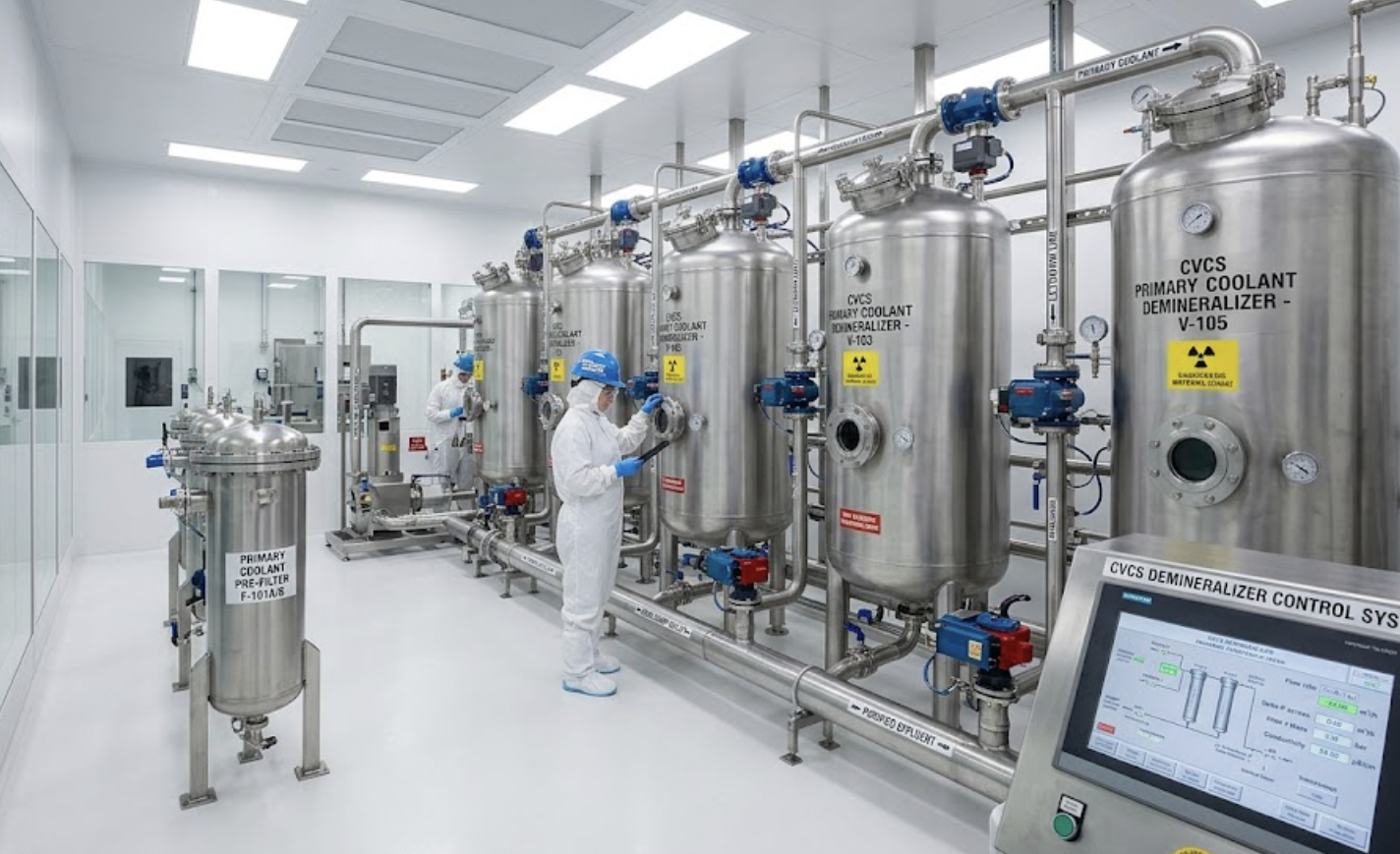
Nuclear power plant primary cooling systems operate under extreme heat, relentless hydraulic velocity, and high radiological exposure. Within pressurized water reactors, coolant water circulates continuously around reactor cores to transfer intense heat while preventing hazardous localized boiling. Maintaining extreme chemical purity inside this primary loop is paramount to nuclear plant safety and operational efficiency. Standard industrial water treatment resins, though effective for general demineralization, fail under these demanding nuclear conditions. As an Advanced Nuclear Grade Cation Resin Solutions Provider, Sunresin manufactures specialized high-purity functional polymers engineered explicitly to withstand reactor core stresses while preventing system degradation.
Standard industrial resins frequently contain trace residual monomers, unreacted organic solvents, and extractable impurities. When exposed to high radiation fields inside primary cooling circuits, lower-grade resins break down and release organic compounds into process streams. These leachable organics decompose into corrosive acids, accelerating stress corrosion cracking in costly stainless steel piping and steam generator tubes. Furthermore, insoluble degradation products form insulating deposits on fuel cladding surfaces, hindering heat transfer and threatening fuel rod integrity. Specialized nuclear-grade strong acid cation resins utilize pristine polymer matrices with sub-part-per-billion ionic purity. These advanced polymers capture dissolved metallic corrosion products and radioactive isotopes, effectively suppressing radioactivity migration across coolant loops and maintaining stable water chemistry.
Q: How Does Monodisperse Bead Technology Enhance Hydraulic Stability in Nuclear Reactor Beds?
Hydraulic stability across ion exchange beds directly governs long-term operational performance in continuous nuclear water purification systems. Conventional suspension polymerization generates resin beads with a broad Gaussian size distribution. When packed into deep-bed exchange columns, smaller beads nestle tightly between larger spheres, clogging inter-particle channels. This irregular bead packing generates high hydraulic flow resistance, causes localized pressure drop spikes, and promotes severe flow channeling across the column volume. Consequently, process fluids bypass significant portions of the resin bed, leading to premature ionic breakthrough and incomplete capacity utilization.
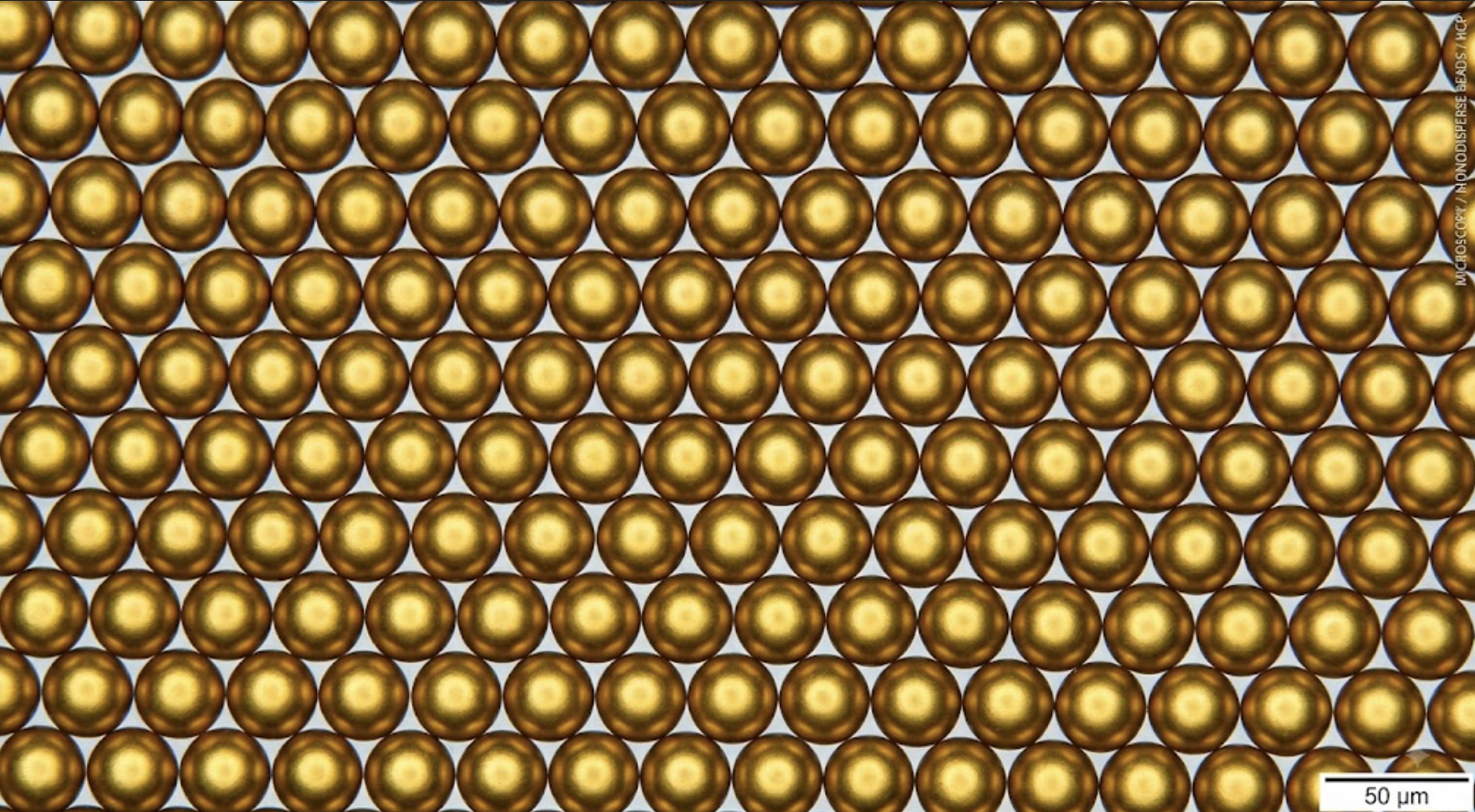
To solve these hydrodynamic challenges, Sunresin developed proprietary jetting-based synthesis technology to produce monodisperse polymer beads with exceptional particle size uniformity. This advanced synthesis method creates perfectly spherical resin beads featuring a uniform diameter. When operators pack these monodisperse beads into primary coolant treatment columns or condensate polishing systems, uniform bead geometry creates consistent void fraction distribution throughout the bed. Consequently, water flows evenly across the entire column cross-section, eliminating localized high-velocity jets and stagnant dead zones. Furthermore, uniform particle sizes significantly lower overall hydraulic pressure drop across high-flow beds, enabling nuclear stations to process larger volumetric flow rates without exceeding structural pressure limits. These structural advantages make monodisperse beads ideal for specialized ultrapure water resin solutions for semiconductor and nuclear power applications.
Q: What Purity and Radiation Resistance Standards Define True Nuclear-Grade Resins?
Nuclear-grade functional polymers must satisfy purity and durability metrics that far surpass standard industrial criteria. In nuclear reactor primary circuits and auxiliary systems, exchange resins must operate continuously in intense radiation fields without suffering physical breakdown or loss of functional exchange capacity. Standard ion exchange resins often undergo rapid radiolytic degradation when exposed to beta and gamma radiation, resulting in matrix decrosslinking, bead fragmentation, and capacity decay. To resist radiolytic attack, Sunresin(Sunresin New Materials Co. Ltd.) utilizes heavily cross-linked styrene-divinylbenzene copolymer architectures that provide high physical toughness and chemical resistance.
Beyond physical durability, nuclear-grade resins require specialized multi-stage purification conditioning prior to deployment. Sunresin subjects its nuclear-grade strong acid cation resin lines to thorough washing protocols using ultra-pure solvents and high-purity water. This exhaustive pre-treatment removes extractable organic compounds, residual solvents, and trace heavy metals down to sub-part-per-billion thresholds. Advanced analytical instruments, including inductively coupled plasma mass spectrometry and total organic carbon analyzers, verify chemical purity across every manufacturing batch. These rigorous purity standards ensure that resin beads deliver maximum functional capacity while releasing zero harmful contaminants into sensitive reactor coolant systems.
Q: How Does Full-Lifecycle Testing Guarantee Safety From Operational Service to Waste Solidification?
Ensuring material reliability in nuclear applications requires comprehensive validation across every operational phase, from initial column loading to post-service disposal. A resin that performs admirably in bench-scale trials must also demonstrate unwavering performance during extended operational exposure inside commercial reactor systems. Sunresin New Materials Co. Ltd. validates its nuclear-grade product lines through rigorous multi-tier testing programs. Out-of-reactor test loops first subject candidate resins to accelerated hydrodynamic shear, elevated thermal cycles, and dynamic pressure surges. Following loop validation, active commercial nuclear power stations deploy the resin within operational purification beds to verify real-world performance under actual reactor conditions.
Furthermore, full-lifecycle engineering validation must address post-operational handling of spent radioactive resins. Once ion exchange media exhaust functional capacity within radioactive water loops, operators must safely remove, store, and solidify spent resins for long-term geological disposal. Structural breakdown or chemical incompatibility during spent resin storage can generate radiolytic gases or compromise encapsulation matrices. To mitigate downstream waste management risks, Sunresin incorporates spent resin cementation solidification studies directly into its material development process. Comprehensive compatibility testing confirms that exhausted nuclear-grade cation resins integrate seamlessly with standard cement formulation matrices, preventing chemical leaching or structural swelling during long-term storage and ensuring full-cycle environmental safety.
Q: How Does Sunresin Combine Materials Manufacturing with Integrated EPC System Delivery?
Translating polymer innovations into dependable industrial supply requires robust manufacturing infrastructure and stringent quality control discipline. Sunresin operates state-of-the-art automated manufacturing plants designed specifically for high-purity functional resin synthesis. Operating under strict ISO-certified quality management frameworks, the company enforces rigorous quality control across every production stage. Automated process monitoring tracks polymerization parameters in real time, while specialized quality control teams analyze raw materials, intermediate polymers, and finished resin batches. Every production batch undergoes comprehensive laboratory testing to verify exchange capacity, bead size distribution, mechanical bead strength, and ionic purity.
To provide complete process guarantees, Sunresin complements high-performance material manufacturing with full-scope Engineering, Procurement, and Construction (EPC) system integration services. Rather than supplying standalone resin products, the company delivers integrated system solutions that combine tailored polymer media with customized equipment design. Engineering specialists collaborate closely with industrial clients through every project phase, offering site feasibility studies, process design, equipment fabrication, system installation, and ongoing technical support. From nuclear power water chemistry control and microelectronics ultrapure water production to hydrometallurgical separation and biopharmaceutical purification, Sunresin delivers reliable, turnkey technology solutions worldwide.
To explore full technical specifications, product portfolios, and global project capabilities, visit https://www.seplite.com/.
Media Contact
Sunresin New Materials Co. Ltd.
+86 29-8669 1600
Sunresin Park, No. 135 Jinye Rd, Xi’an Hi-tech Industrial Development Zone, Shaanxi, China
Source :Sunresin New Materials Co. Ltd.
This article was originally published by IssueWire. Read the original article here.











YOUR NEWS, OUR NETWORK.
Do you have Great News you want to tell the world?
Be it updates about your business or your community, you can make sure that it’s heard by submitting your story to our network reaching hundreds of news sites across 6 verticals.